Originally published June 11, 2013, lightly edited for clarity.
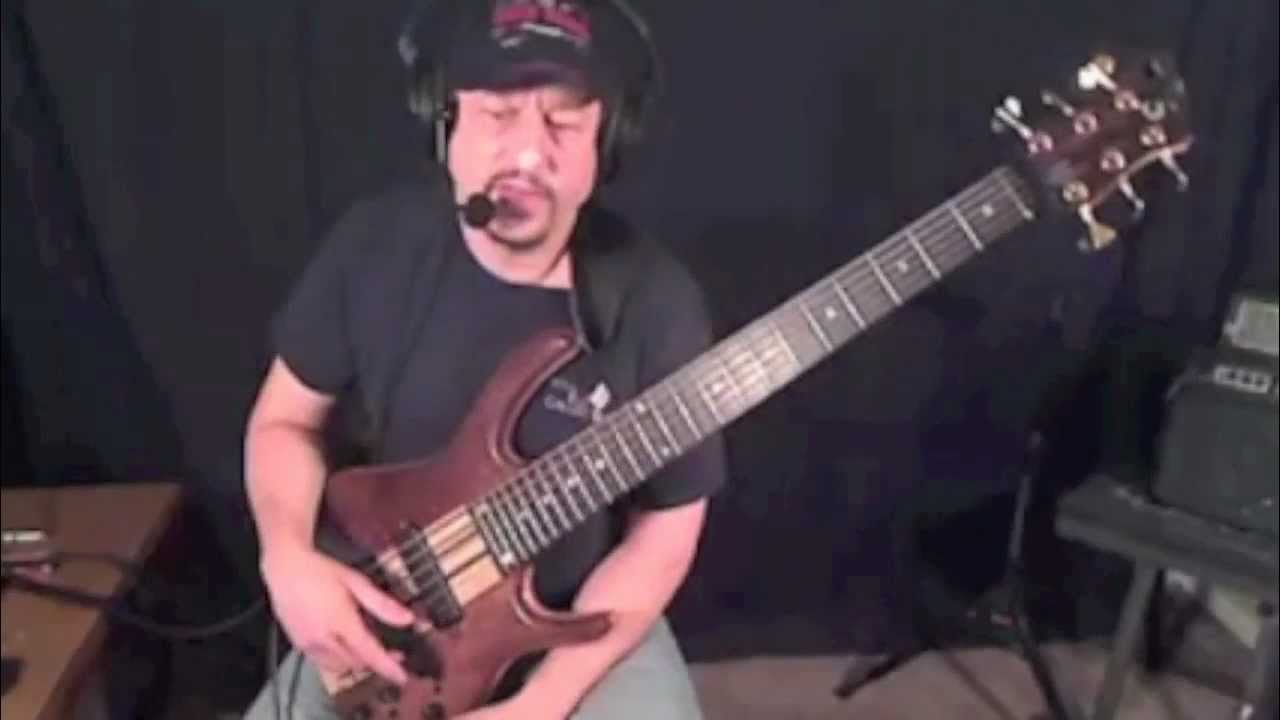
As with my last post, I would like to chat about things I like to think about when coming up with a bass line. First and foremost, please listen. It seems that people are so in a hurry to play something that they forget to, or choose not to listen to how their bass line is supporting or not, the other instruments and what they are playing. Besides basic note and rhythm choices, there are the forgotten worlds of note duration, articulation, tone, space, and dynamics. (I am deliberately leaving groove out for now as it should be a given that you should always be in the groove before you start playing and that the before mentioned elements will help make or break the groove depending on how they are applied to the bass line.) Even the simplest bass line can have multitudes of different little things that you can add to it or subtract from it. I think an important part of practicing should be to come up with a bass line over something and then practice changing and rearranging the elements like note duration, articulation, tone, space, and dynamics and get used to being very aware of them and how they affect a line and each other. The following video looks into coming up with a bass line over a rhythm track and, by listening to the track, figuring out how to construct the line. Bass-line construction is one of the fundamentals I teach. For personalized feedback on your own bass lines, online bass lessons via Zoom are available.
Read the transcript
If I said, okay, let's add some threes, fives, maybe sixths, to this line, let's increase the harmonic activity here, yeah, what would be the first thing you would do to tackle that?
Well, the first thing I would, I would go to, because I'm very comfortable with it, is go, well, first thing I would recommend to do is put on the track and listen to it and come up with an idea in your mind first. Yeah. So the first thing you could do with the bass, before you listen to the track and start adding, you know, or listen to the track, start with your mind doing a part, is to like get the sound of the threes, fives, and sixths in your head. One, three, five, six, five, three, one, three, five, six, five, three, one, just can't get those tones in your head with the numbers. I probably wouldn't play it like that, though.
Oh, another thing about this, we'll talk about a positional aspect too, we got somethin' to think about there, because we could fatten it up doing it here, but then we got to think about how you want to treat that five chord. We lose, we lose this on the five, but we'll get back to that. Yeah.
So now if I put on the track, now listen to the track, listen to like the kind of accordion kind of sound, what are you hearing there? It's almost like a trill. Oh, well, well, I'm here, of conv... movement of dum dum bunt up a dum-dum, but dump it, dum bump, but dump it, dum bump, but dump it, dumped in the accordion part, dunk, dunk, dunk it, dunk it, dunk it, done.
Listen again, so there's a clue that where you might do something rhythmically with those notes, because that sound like one, one, three, five, six, five, one, three, five, six, five, one, three, five, six, five, one. So let's try that and see if it works. So, this is, see what I mean, that I came up with something in my head, don't dump but dump a dumb, and I was able to actually find that because I pre, kind of got my ears, one, three, five, six, mine, so high-strung, and you could actually vary that line somewhat, break it up, sometimes do the threes, maybe do the threes on the chorus and just leave the threes out, and just do the fives on the verse. Oh, yeah. One, five, five, six, five, one, five, five, six, five, one, and we go to the chorus, one end of it, to give it a little variety and beef it up a little bit, no, just a little bit, more activity, raises the intensity level a little bit.
Yeah, right, I was just finding out that, no, durational things were talking to me there. Yeah, because, like, on the verses, it just started to sound a little choppy to me, it just kind of, sometimes the musical, tap you on the shoulder and go, hey, yeah, what you're doing, work it, uh, let's rethink this one, you know. It just started to feel uncomfortable, I started thinking about it, you know, now sometimes these things can come back and bite you, you know, you start, ain't over-analyzing things, you know, it's, careful not to go too far with it, but I think it's good to really kind of really think about breaking these things down and listening to the little tiny things that you can do that really make a difference. Yeah.
So going, verse now versus a chorus, you know, how you treat the one, you know, the duh-duh-dun, doesn't, uh, versus, done, that, that done, yet, yeah. You got all of a sudden, you got all these little options that start to come up, you know, on how you treat note durational aspects of the line, and what actually works the best. Yeah.
So where you're really going to get the benefit of this is to break it down and try different ways, and also, if you can record yourself and listen back to the audio of you playing the bass with the track, and listen back to it and see what you think about it, and it's not like record the whole thing, but maybe just a verse or chorus, or a couple of verses and a couple of choruses or something. Yeah, you.