Originally published April 13, 2015, lightly edited for clarity.
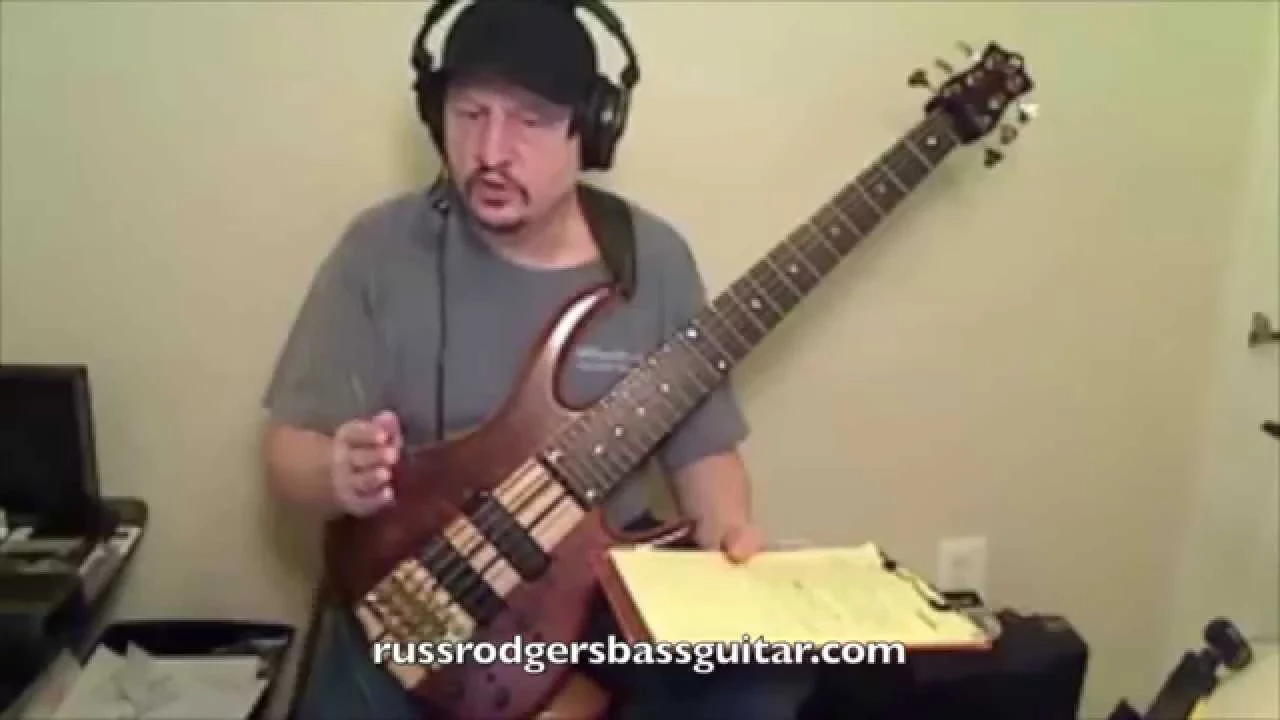
I used to think scales were the most important things to work on as far as music vocabulary was concerned, but the more I played and studied the more I realized that triads and arpeggios are the most important part of music vocabulary to really have down. The problem is that you really need to know what a scale is and why a scale is what it is to really understand theory behind arpeggios and triads all the while knowing that all of these things are just a way of organizing, indexing, and cataloging your notes. As I have stated before, the triads are the harmonic material of all the bass lines you have played and will ever play. The way I like to work on composing a bass line for a particular groove or tune is to find what I call the harmonic and rhythmic core and build from there. The following video gets into the first important steps of this process. Harmony is one of the fundamentals I teach. If you want to work on composing stronger bass lines from triads, online bass lessons via Zoom are available.
Read the transcript
So, let's say you were at a jam. Somebody said, "Okay, we're doing A minor 7 to D7, two beats a piece, just a vamp, come up with a bass line for it." Okay? Because that's the kind of situation you're going to run into. You're going to be given some information. Sometimes they might just play it and you have to kind of figure it out by ear. Sometimes that'll happen too. But let's say you're playing with a guitar player or a piano player and a drummer and they're saying, "Okay, yeah, it's an A minor 7, D7 vamp, two beats a piece." What does that mean, two beats a piece? One, two, three, four. Each chord gets two beats in four-four time. If you know that, you understand what a measure of four-four time is.
So, the first two beats of that measure are going to get one chord, the A minor 7 chord. The second two beats are going to get the D7 chord. So if I listen to it, two three four, one two three four, one two three. It's kind of like a slow four. One two three four. Now you might ask, how do I know it's that and not counting it like one two three four, one two three four twice? You always listen for the snare drum. Snare drum is on two and four. So if you listen to where the snare is, one, three, four, one two three four. So that's how I know how to count it that way instead of one two three four, one two three four. You see? Does that make sense? Oh yeah. Okay.
So we know the first two beats are A minor and the second two beats are D7. Now, with our triad knowledge, this is where we start using that information on the triad stuff. So first we've got to know what triad goes with what. So the A minor 7 chord is going to get what kind of triad? A minor one, right. D7's going to get major. Makes sense, right? So that means that when you're playing, you're picking your notes for this thing, you might want to go left side, you might want to do a center, you might want to do a right. It just kind of depends on where things are. You make those choices depending on how you want to set up the line. Do you want to be here or here or here? It's going to make a difference.
Okay, now we're not really to the point in the analysis yet to kind of figure out what position or section we want to play. We've got to find what I call our groove denominator, or core. We've got to find our core. Now, core means the simplest thing that you can do and the music still survives. Okay? Because you want to base your choices off the core, because if you don't, then you're not going to be locked into the essence of the groove and the feel that you need to get into.
Now, the harmonic core notewise is always easy. You just play root notes, right? That's the simplest thing you can do. What's not as obvious sometimes is the rhythmic core, because you have to find both the harmonic core and the rhythmic core to get started. The harmonic core is always going to be just root notes, so that part's easy. The rhythmic core, you've got to say, okay, well, what is that going to be? Then we have to listen to the track and listen to the bass drum and find the main hits of that bass drum to lock our root notes in. And that's where we're going to start to formulate our bass line.
So if we listen to it, one of the good first things to do here is to count with it and find our rhythmic subdivision. Remember when I said in the styles stuff about getting used to counting out loud, and how it's going to be your best friend, but it's going to be kind of like a pain in the butt at first, and it's going to get in the way. But this is where it starts to become a useful tool and we use it. Because now we put the rhythmic framework in a grid of whatever the smallest subdivision of that measure is going to be, which in this case is going to be 16th notes for this particular band. Two three e and four e and one e and two e and three e and four e and one e and two e and three e and four e and one, two. I'm feeling my pulse on the one two three four, one two three four, one two three four, one e and two e and three e and four e and one e and two e and the three e and four e and the one e and the two.
So the first thing I want you to do with this is I want you to count 16th notes with the track and get real comfortable just counting with it as you listen to it. We're going to call this section bass lines. So we're going to start to work up a methodology of putting together bass lines with tracks and stuff that you're going to be playing.
Now, why did you pick 16th notes for that? Well, because I listened to where the one two three fours were. First, I need to find that. That's our basic pulse in four-four time, we've got to find out where that one two three four is, our quarter notes. And then we listen to where the other rhythms, the other instruments, are subdividing the rhythms. You could say eighth notes, one and two and three and four and one, but I'm listening to the bass drum, and I'm hearing him hitting stuff in between those eighth notes. So that tells me that's not my rhythmic core yet. I need to go another division further. One e and two e and three e and... you hear how the bass drum hits line up with those? So that's what you listen for, you figure out what subdivision the bass drum is working off of. Then you start counting there, because chances are you're going to be doing some 16th note hits with that bass drum for your core. Doesn't mean always you're going to do it, but in this case you would be.
Now, we're starting off a little complex here with the 16th notes, I know, but this is the kind of thing that you're definitely going to run into right away when you play with people. So, I figure, why not dive in the deep end right off the bat here. So, do you have any questions so far?