Originally published June 9, 2013, lightly edited for clarity.
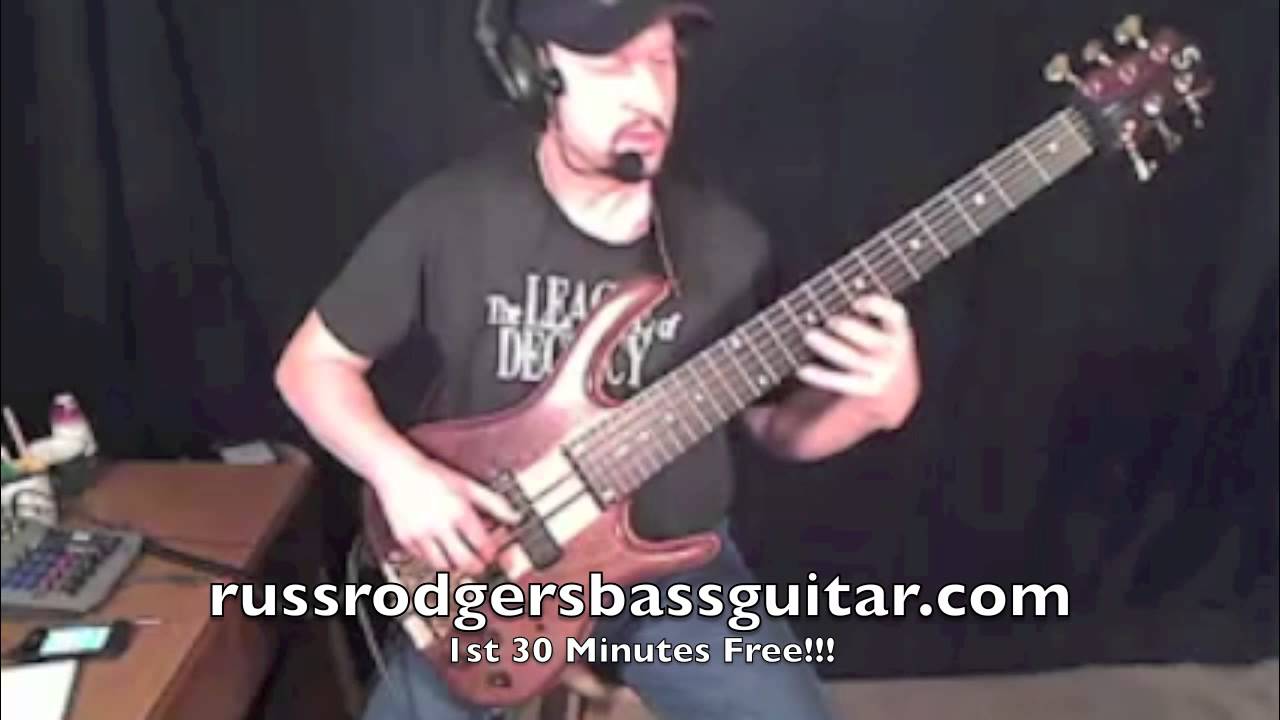
I remember the seemingly endless hours of running scales on my bass and thinking to myself “Why am I doing this?” “I never hear anybody do this on stage!!” I did know that it was beneficial for getting my hands in shape for playing on the fingerboard, but I could never make the connection with the way I was practicing scales to the way I would actually use them when I played music. I finally figured it out!! Check out this video for a new way to look at and practice scales that really works!! Scale practice is one of the fundamentals I teach. For hands-on help applying scales in your own playing, online bass lessons via Zoom are available.
Read the transcript
All right, what's scales. The first thing, go ahead, is, what is music. Music as a concept, okay?
Well, how would you, what, how would you respond to that?
Oh, I didn't say anything. I mean, how would you, I mean, how...
Oh, sound. Language. All right, is a language. Language is what we're looking for. It is a language, that's what music is. It's communication based on emotion. The player feels, plays. The listener hears, feels. And that's it. It's communicating feelings through the use of sounds.
All right, so looking at music in that way, and all the things that you work on, both with harmony, reading, or any of that stuff, it's good to equate it to what you already know how to do, because it's really the same thing conceptually. The only real difference between music and the spoken language is that there's no intellect involved in the communication process. It's communicating feelings through the use of sounds. The other big difference is the bass is what's producing the sounds for the language, like your vocal cords, that's what the bass is. It's just making the sound. Right? So the bass playing is not in the bass, right? It's in you.
The notes are the alphabet and/or vocabulary for the language of music. Notes are organized into scales for a lot the same reason that letters are organized into words, words into sentences, sentences and paragraphs. It's a way to organize the vocabulary to use it to communicate. So look, I recommend looking at scales as an organizational process for your note choices, for what you want to play.
All right, and that falls into the category of harmony and theory, which basically is an attempt just to explain what we're hearing. It's kind of like going to English class, you know, and studying pronouns, adjectives, and all that stuff. You know, it's a technical description of the language, right? But you don't think about that stuff when you talk, you just talk. But if I stopped you mid-sentence on a word and said, well, how do you spell that word, you'd probably be able to tell me, right? You know it, but you're not thinking about it when you actually, you know, play. Just as if I were playing, I'm not thinking about anything there. I'm just hearing what I want to play and play. But if you stopped me on a note, I'd be able to tell you. And I can also tell you that I did restrict my choices to the notes of the A major scale, but it didn't sound like I was playing a scale though, right?
Right. So spending a lot of time, you know, practicing scales that way is really not going to serve you very well, because I've never heard anybody get on stage and do that, ever, right? So basically, practicing scales in that way doesn't really help you. I mean, it's good to hear what the scales sound like, and it's okay for a hand exercise, but that's about it. What you really need to know is where all your choices of that scale are. You need to know where they are, you need to know what they are, and you need to know why they are what they are, to have full control over those note choices, to use them in the way that you want to communicate with them.
Now, the basic game in music is really matching the right scale to the right chord, from a, what they call, chord scale theory point of view, right? This harmony and theory stuff, again, like I said, is an attempt to explain what we're hearing. It's not always accurate, and it's not always correct, you know, that's why they call it theory and not truth, you know. So use those as basic guidelines. And when harmony and theory doesn't answer the questions, you turn to something called functional harmony, which is where you look at how something actually works, as opposed to what the rule book says it should do, and explain things that happen that way, that are outside the rules, or that actually break the rules. Okay.
All right, now, I've got PDF files of the scale stuff. Now I'm going to do a screen share. I'm going to go away, and you're going to start, you're going to see what's on my screen. Okay, so let me know when this thing pops up. This is what I sent you today. Okay.