Originally published June 5, 2013, lightly edited for clarity.
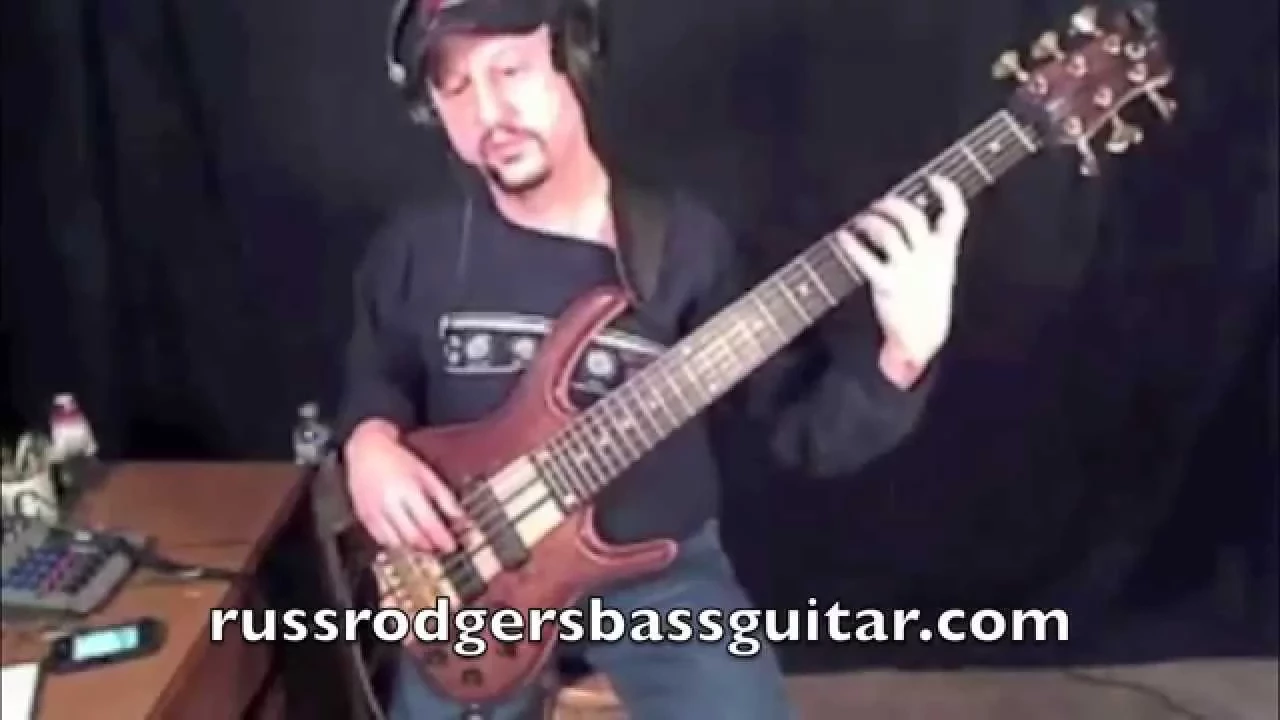
After getting the basic geography down of where the notes of a scale are on the bass fingerboard vertical relationships using my 3 note per string box technique, we then move on to navigating the notes of the scale in more of a horizontal fashion using an exercise I call the 4 Note Bridge. In this exercise we go up and down the bass neck in different 2, 3, and 4 note string combinations (5 and 6 too for 5 & 6 string basses), exploring some really cool ways to practice navigating scale note choices. The boxes themselves come out of the number system approach to scales, where I get into why each scale note gets its own shape. Check out this video to get a peek at this effective way of getting around your bass fingerboard using scales!! Scale navigation is one of the fundamentals I teach. If you want guided practice on scale navigation across the neck, online bass lessons via Zoom are available.
Read the transcript
Now the four note bridge is a pretty complex exercise, or series of exercises, in that it has different string combinations, and for each string combination it has four ways. So our string combinations for us are going to be E and A, A and D, D and G. All right, and those are two-note, two-string combinations. Then we're going to have three-string combinations, which are going to be E, A, and D, and A, D, and G. And then a four-string combination, which is going to be E, A, D, G. Now each one of those combinations has four different ways to do it, so it's pretty massive exercise.
All right, so the first is the two-string combination, E and A, A and D, D and G. All right, for the E and A we're going to have four different ways. The first way is to do our shift on the first finger, and basically what we're going to do is we're going to play four notes per string. In other words, play through two boxes on each string, doing a first finger shift into the next box. So, in a case like the five box and the six box, you would shift from zero to two on the first string. But that's already, that's I think it's already there. Yeah, on the first one you're not going to shift. Yeah, because you're doing an open string. The open string is taking care of the shift.
Like on the E string starting point, if I go E, E, F sharp, G sharp, A, I'm playing four notes, which means I'm playing through two boxes. Mhm. I'm doing the five box, then the six box, but I'm just doing them together. Oh, right. Five, six, seven, one. Note function. So it'd be five, six, seven, one, five, six, seven, one, all on the E string. Mhm. So you see I'm doing the five box and the six box here. Right. Yeah, yeah.
Now, once I finish the fourth note of the string I'm on, I shift to the first finger starting point of the box that I'm in, which is the six box here, which would be the first finger, second fret on the A string, the B note. Five, six, seven, one, two. All right, now once I start the new string, I immediately do a first finger shift into the next box. So I'm doing a first finger shift into the seven box. So I've got five, six, seven, one, two, three, first finger shift into note function number three, which is the A string starting point of the seven box. I see that. Yep. Right, then complete it. Right, then I go to the box, once I do four notes per string, I go to the next string. So I go back to the E string, but I go to the box that I'm in. So you're in the one box? No, I'm in the seven box. I'm on the fourth finger note of the A string of the seventh box. Of the seven box.
Let me do this exercise once up in its entirety, because I think once you see it in context, this will make more sense. Yeah, okay, please. All right. You know, it has a certain symmetry. It sounds, it has a certain, yeah, yeah, you know what I mean? So, all right, so that's fingering in geography, right? Note function: five, six, seven, one, two, three, four, five, seven, one, two, three, four, five, six, seven, two, three, four, five, six, seven, one, two, four, five, six, seven, one, two, three, four, six, seven, one, two. Right, right.
Then you put the beats in eighth notes: one and two and three and four and, one and two and three and four and. Right. Sixteenths: one-e-and-a, two-e-and-a, three-e-and-a, four-e-and-a, one-e-and-a. Right, you're feeling the pulse on the downbeats. Triplets: one-e-and, two, now this is trickier, because you've got the four notes against the three. One-e-and, two-e-and, three-e-and, four-e-and, one-e-and, two. I screwed that up. But that's the idea. Man, that's hard. That's just two strings. Okay. Yeah, it gets deep. But you're talking about really some sophisticated control of geography here, fingering and note function and timing. Mhm. Okay, so it's pretty cool.