Originally published June 3, 2013, lightly edited for clarity.
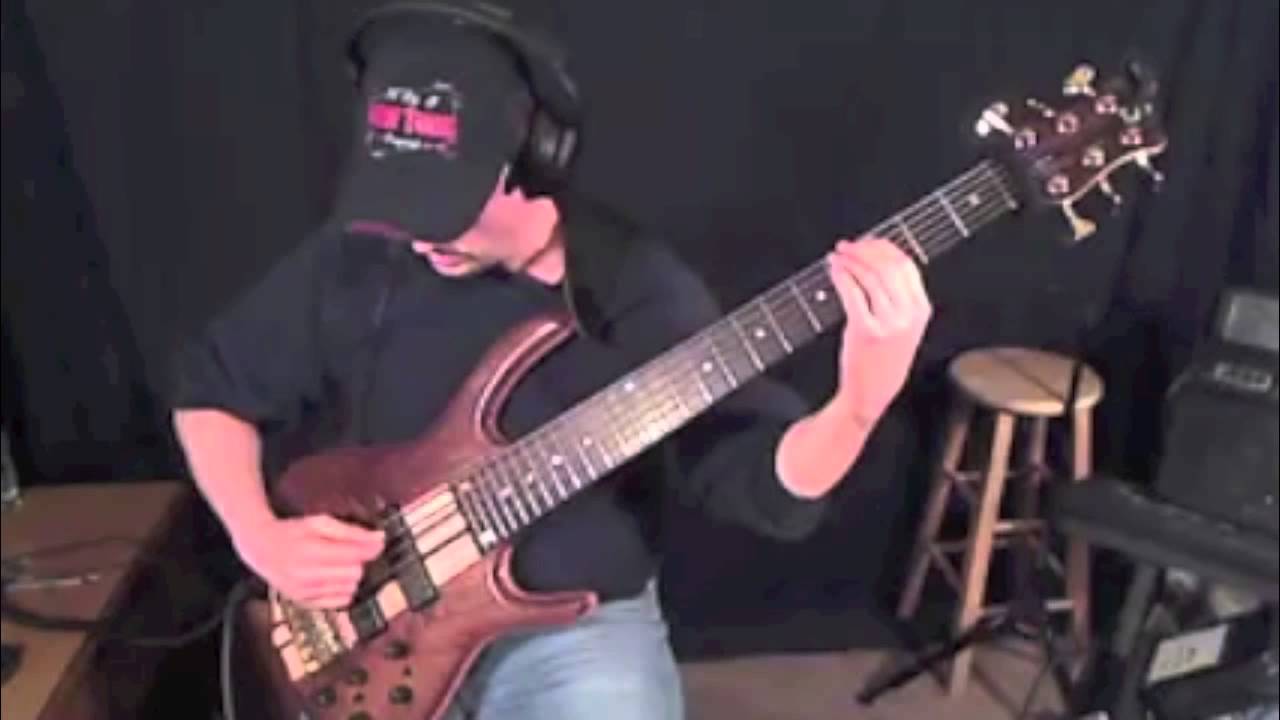
When it comes to technique, I love efficiency. I feel that most excess motion is wasted energy which I would rather have channeled into my bass playing in a more productive way. Put another way, why work harder than you have to. When I started using a pick, I used to like to have the heel of my picking hand rest on the bass for support. It helped make it easier to put more power into the string by resting my hand against the bass. This was good for a while until my technique developed to the point to where I wanted to move the picking hand around for more advanced lines and to pick multiple strings. I then realized that having my hand resting on the bass was making these things much harder to do. After struggling to make it work, I asked some guitar players about it and they suggested letting my picking hand float over the strings. It took some work to get that comfortable, but once it started to kick in, the things I was trying to play became much easier to do. If you like to play your bass with a pick, give it a try and let me know what you think. The video below shows this in action. Right-hand technique is one of the fundamentals I teach. For personalized guidance on right-hand technique, online bass lessons via Zoom are available.
Read the transcript
Now, this is up to you, but I recommend that you don't brace your fingers on the bass or anywhere. You let the arm completely free float. Okay? Let the shoulder hold it all together. So you're not resting your arm on the bass, you're not touching anything else. The only thing that's contacting the bass is the pick on the strings. Because I started off doing this like having my fingers rest somewhere like this, you know, and what it ends up doing is limiting your motion once you start to really develop the technique. This way, it keeps the hand to where it's totally free to move any way you need it to. It's not restricted or held, you don't have to hold on to anything.
But initially, like with the other styles, you know, if you notice your shoulder getting tired from not resting your arm on the bass, and the two finger picking technique, because really the shoulder is what holds us together. Yeah, like my shoulder doesn't get tired anymore. It did at the beginning. Well, that's kind of pick, not on the finger, it probably won't be an issue if it's already okay with the fingers, it ought to be okay with the pick too. I just wanted to let you know that sometimes you might notice a little, if you're working some different muscles here with the pick than you are with the fingers, so you might notice some fatigue in the upper arm a little bit.
All right, well, I probably have been resting, as you noticed, and so this may get rough, but I'll try it with the arm floating free. Go ahead. No, you could also, to simplify things, you could go back to work on, if you found you needed to go back and build some technique with the arm not being supported anywhere, go back to blues number one, or exercise number one, or number two. I'll go back to blues number one. That's a good idea. Just see how it goes. Okay. Three, four.
So that's all downstrokes, right? It looked like you tried to alternate at first and changed your mind. Yeah, I went up, down, up, down, I haven't mastered them all. Well, and I have a really hard time getting the pocket in there, because they all sound the same. Well, the thing about it is, don't worry about the pocket at first, focus on consistency of the notes, like extremely flatlined, okay, like one and two and three, to where if I wasn't watching you, I shouldn't be able to tell, or be barely able to tell, whether you were just doing downstrokes, or down up, or up down. I couldn't tell by listening to it. That's what you want to go for. So if you're just doing downstrokes, just go for evenness of attack first, don't worry about the pocket at all.
In other words, get them all to sound the same. Okay, now with the down up. Up, get those to sound the same. And then up down, and then be able to manage that with the eighth notes.
Okay, and a good project for me, huh, that'll be a good project for me. Yeah, because I feel I don't really have very much control. It'll take a little time, and it's going to feel really awkward without that support of bracing the hand somewhere, but you will get used to it, and later on you're going to be really glad you did that. Okay, it's just going to free you up so much more to do some more advanced stuff later on, because the problem I ran into is it really felt good, so I fought it for a long time, but I kept running into things that I wanted to play that I just couldn't do because my fingers were in the way, bracing the hand.
Go ahead and dig in a little bit, go ahead and hit, pick a little bit harder with the pick, and just stay on the G. Okay, all right, go ahead. Or E. Now, are you using kind of a wrist motion like that? I'm kind of rotating a little. Is that... watch mine, minimize motion. Okay, but the thing to also watch out for that we talked about with the pick is making sure that you strike the string in a place where you're not going to get that sizzle. Now try down up strokes, no, up and down, up and down, up and down, alternating strokes. Huh? Alternating strokes.
Now, you're not bracing your arm on the bass, right? You're not bracing your arm on the bass, right? No. I can turn to the side if... no, no, no, it's fine, it's fine, I just want to make sure, I just couldn't tell from this angle. I just want to make sure, one thing, I'm not sure if it's just the way the camera is looking, but it almost looks like you're kind of picking out and up. You're not... is that what you're doing? I don't know, let me try to turn. Can you see better from this angle? Yeah. Go ahead. Okay, try not to let it be too much of an upward motion like this, don't let it... can you see me? Okay, yeah, don't let it be, now I'm exaggerating, but don't let it be like you're picking out that way, that you're... it's still kind of more of a down, that you're choking it so it doesn't actually hit this next string. Okay. Uh-huh. Just minimize any kind of severe up motion. But that looks fine.
On the, when you're picking up, how do you, is it okay to come out a little, or do you need to rotate your hand so that it's... well, watch mine. You see that? Yeah. So you're pretty much level either way, as much as possible. Okay, you want to avoid excess movement of the hand.
Uh-huh, that's fine, that's fine, good. That was more in my fingers and less with the wrist. Now, the harder you play, the more it might be that the wrist comes into action. And also, you could have stuff like, where you actually, this is where not grounding your hand is really going to pay off, when you start doing stuff like that. Okay, you're kind of doing double stops, and those fifth kind of things are really cool with rock, plus if you get a little distortion on that, or some effects, that sounds pretty cool too. Oh yeah, that would be awesome. Okay, all right, good. Well, you're just blazing through everything, aren't you?