Originally published June 5, 2013, lightly edited for clarity.
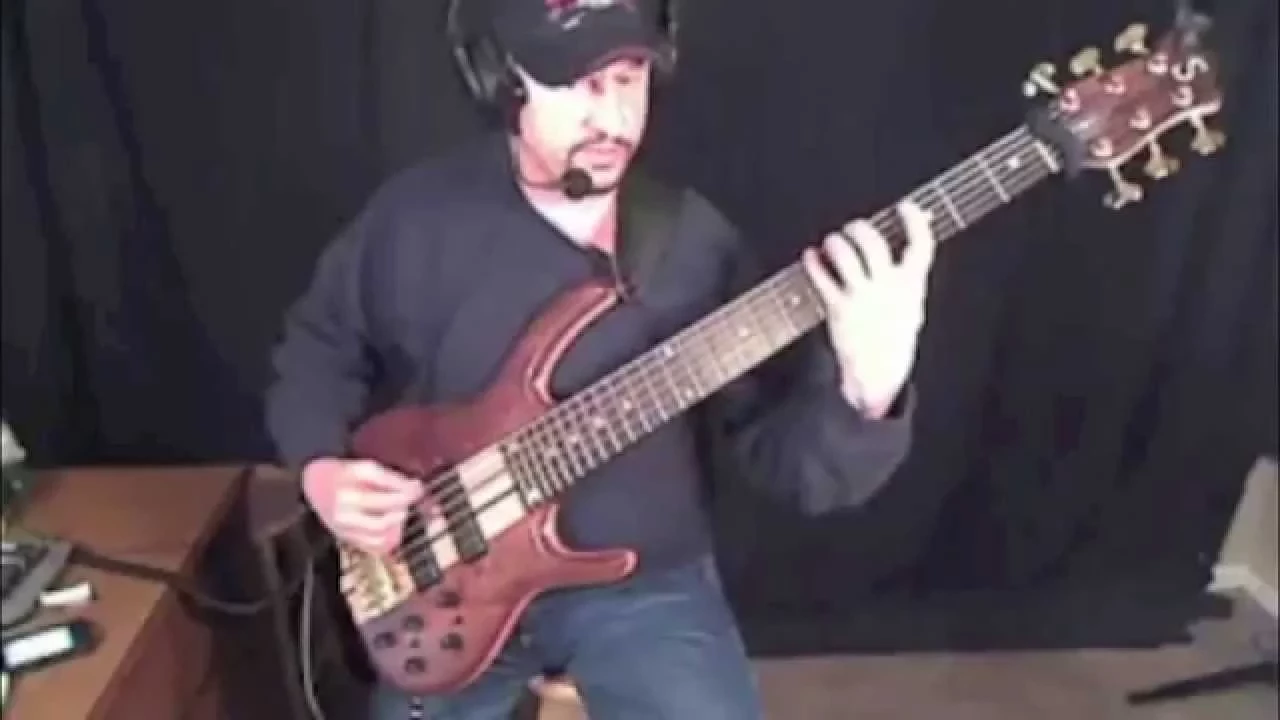
One of the biggest technical challenges in playing an amplified instrument like the bass guitar is keeping the strings you are not playing quiet. The vibration of one string through the wood of the instrument will cause the other strings that are not muted to vibrate and create uncontrolled sound in your playing. There is certainly not one way to do this, but it is certain that you need to do something or they will ring. The following video shows one of the techniques I use to mute strings while I am Playing with a pick. Muting technique is one of the fundamentals I teach. If you want personalized feedback on your muting and picking technique, online bass lessons via Zoom are available.
Read the transcript
Okay, what are the questions that I did have? This, like, you know, when you're using two fingers and you've got some to help, doesn't the noise of the other strings, how does that work with the pick? Do you just kind of live with it?
No, you have to get creative with the left hand to do that. Well, actually, uh, I use my slap, you know, my slap-style muting technique, because you have the same problem with that, because your right hand is no longer able to mute with that technique as well.
Okay, basically what I do is, now, you do different things depending on what you're playing, so it's not a one-size-fits-all that's going to take care of everything. Sometimes you just got to be creative and use a finger that's available to touch something that needs to be touched. But if I'm just working on the first four strings of the bass, an exercise to work with is just to do a one-two-three-four fingering to start off with.
Now, when I go to my first finger, like on the B string or on your E string, you don't really have to worry about anything, because your first finger is going to be draped over the higher strings, here, we talked about that, it's the same as this way. Okay, so as I go to my next string up, when I go to my first finger note, I use two, three, and four to touch whatever strings need to be touched, in this case would be your E string. So if I went one, two, three, or, well, I go to my first finger on what would be your A string, I have these three fingers touching the E. Right, and then when I go to my second, third, and fourth finger note, I just let the first finger bar over all the strings.
So basically the formula is, when you're playing a first-finger note, two, three, and four touch what needs to be touched, when you're playing a second, third, or fourth finger note, then the first finger bars over and keeps everything quiet. Okay, so it's like a regular guitar, like the whole bar chords? Well, yeah, except when the first finger is busy, okay, then two, three, and four touch and the first finger bars.
Let's see, I'll let that, I let that just kind of move around, I don't try to, it doesn't have to be anywhere, it just needs to be touching. Unscrewing, so keep the hand relaxed. Well, I go, the A string, or the D, won't be your D string, that I touch these two, then when I go to my second finger note, first finger bars, I go to my G string, then I touch these three, and I find my second finger works better touching the E, third touching the A, and four touching the D. Okay, right, but remember, be careful not to press down, because then those notes will ring just like if they were open. So it's just slightly touching. So when I'm playing that first finger on the G string, right, and then I switch to my second finger, so watch this move here, that's basically, yet again, there's gonna be situations where you're gonna do different kinds of things that you need to do, okay, because this will get most of it.
Also, if you use these hair scrunchies, if you don't have to use open strings, you can kind of use those to help keep stuff quiet, they don't get rid of everything, but it helps. Those out, yeah, then you can just kick them out of the way, you know, if you kick them over the nut, get them out of the way, if you need open strings. But also remember to keep that arm off the bass. Yeah. Nah, I don't think you were resting it on there. Didn't it look like you were? But I try not to, I haven't caught myself doing it. I mean, if it raises it a little bit, that's one thing, but no significant pressure, you know. Okay, now, looks like you're in good shape there.