Originally published June 20, 2015, lightly edited for clarity.
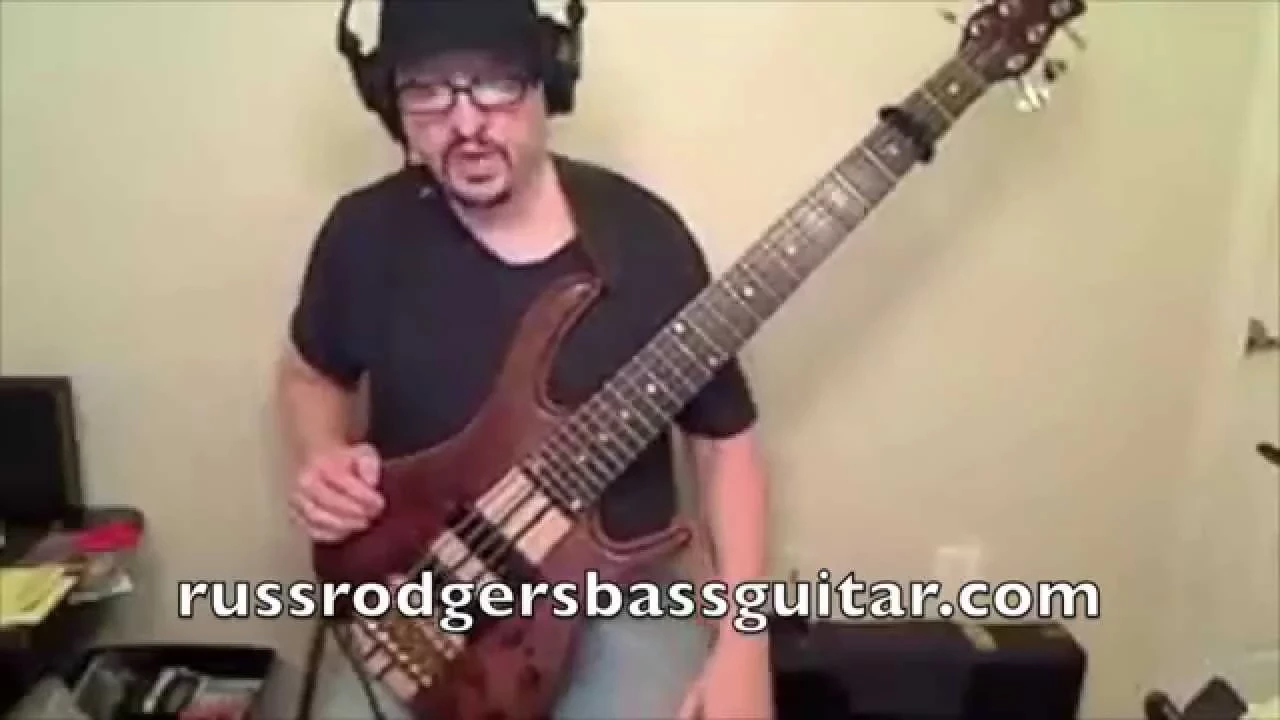
I look at Technique as simply the process of physically getting the music you are hearing through your hands onto the instrument. Looking at it this way it seems to me that you only need enough technique to play what you hear and in practicing technique, it is important that you, the musician, find the appropriate balance between practicing exercises and the practicing of playing music. If you do not apply the technical information of the exercise to a song, the exercise will not help you improve and you will be wasting practice time. That being said, when working on right and left hand exercises on the bass I suggest working on what I call the default positioning of your hands. This means find the most relaxed position for the hand and practice exercises and music slowly in this position. There will be, of course, times as you play faster in the lower positions of the bass that you will need to stretch out the fingers to get to your notes on time. The idea is to always go back to the default position every chance you get and mostly work from that relaxed place. The following online bass lesson shows how to set up the default position for your left hand. Left-hand technique is one of the fundamentals I teach. If you want personalized feedback on your left-hand form, online bass lessons via Zoom are available.
Read the transcript
Okay, because the thing with your thumb, let's talk about the left hand for a second. Okay, basically left hand technique works like this, or my view on technique is that you want to have the hands always operating in their most relaxed position. And so to start with that, we just let our hand go limp, right, and just flip it over, and then we just drop the bass neck in there. So, see where your thumb is, see how it's pointing towards the headstock?
Yes, that's where you want it. Oh, okay. You don't, in other words, you want the hand in a very relaxed position like this, you never want the thumb this way. Ah, okay. Because that just tightens up the whole arm, and this, this other video that I sent, and I'll send that link again, okay, because it just tightens up the whole arm, it just screws up everything. So yeah, I felt, I felt that and I kind of panicked a little bit there.
So, you know, basically, if you just, again, just let your hand go limp, just flip it over, look at that, because there's your, there's your left hand technique right there. The only thing is you don't want the wrist to come in this way, it's just straight or slightly outward, but it's just like if you just had your hand like that, you just slide the bass neck in there and that's it.
So, okay, so turn around this way, can you see the back of my bass? Yes. See where my hand is, like this. So if I just did this, so when I play on the instrument, the hand just stays real light back there. Okay, it moves like this. You never want the thumb this way, because do you feel how, going from this to this, how your whole arm tightens up?
Yes. So it should always be just like that, and when you get to the higher register you actually come out and brace like this, okay, because this allows you to reach up in this area if you ever need to get up in there, but back behind the neck, like, if I were, like, always like that and never let the wrist come in this way.
Okay, so I'm gonna send you that link. And, uh, was that, was that in the original few emails that you sent me? Probably, probably. I probably just missed it because I know there was, there was a few of them. Okay, all right, so I'll send it again. Perfect. All right, so it'll be, you know, it'll say something like, Russ Rodgers sent you this link to the YouTube video. All right, that's a big relief.
Okay, so when you do that left-hand stuff they talk about, when I, that I talk about in that video, just let your thumb be that way, do everything else what it says. Okay, all right, any other questions?