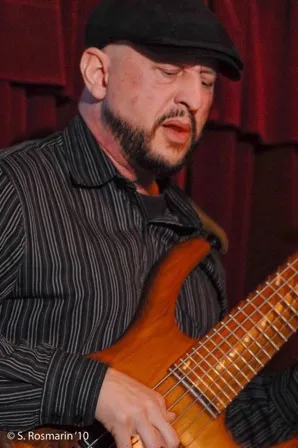
A bass player at one of my clinics asked the question every working musician runs into, which is when it is right to leave the pocket and get melodic, and when you should just lock in. Play too much and you are in the singer's way. Play too little and the song sits there. Below is how I answer it, and the Victor Wooten drill I point people to for stepping out without fear.
Ask the music
I once asked a mentor this same kind of question, what should I play here, this or that, and I got a question back instead of an answer. "What are you asking me for? If you're really listening to the music, it'll tell you what to do every time." Ask the music. Listen to the music. Let it tell you when it feels right to step out.
That sounds vague until you put it against real situations. If the singer is singing and you go into a blistering fill, that is a no, you would be stepping on their moment. If the guitar player is soloing, though, or there is a hole in the arrangement, that is your invitation. Some bass players, Phil Lesh, Mike Gordon, sound like they're all over the place and it still sounds right, because they are reading those same openings.
The bigger factor is the gig itself. In a cover band, you are supposed to be playing the song, so that is not the time to get fancy. In original instrumental music, where embellishment is part of what people came to hear, it is a different situation. A dance gig is its own case, people are there to move, so don't get in the way of that. As a general rule, unless it is an actual bass solo, stick to the groove and the bass line, because that is the job. Even players who solo constantly, like Marcus Miller, keep a bass part running underneath, often with the keyboard player covering it while the bass is up front on the melody.
The same logic applies if it is someone else overplaying or underplaying and not you. My advice would be to suggest it rather than lecture ("do a little more here") and let them find it, or to show them on your own instrument. Saying "more" to a less experienced player can mean just about anything, so play them an example they can hear.
Practice the wrong notes
Once you know when to step out, the next question is what happens if the notes you reach for are wrong. I lean on Victor Wooten here. "Practice making them. Practice playing the wrong notes so you're not afraid of them." I like to play it two ways in a clinic, a solo where not a single note is "right" but it still feels good, against a version with all the right notes and no groove behind it. People like the wrong-notes version better every time, and that tells you something! Groove always. Make it feel good, because if it grooves it works, up to a point, since people generally feel music before they listen to it. Even hitting every wrong note in the book, there is still something for them to latch onto, as long as the groove is there first.
That same instinct covers you when you do not know a tune. If you do not know the changes or the key, groove your way to the answer instead of poking around note by note (that one should be a bumper sticker, by the way). Commit to the feel first and let your ear find the notes underneath it.
Groove comes first, every time
All of that works because groove matters more than the notes. Groove is a physical reaction to music, analogous to dance, the feeling of being lost in a song. I have watched a drummer, JD Blair, take a solo, not play a single note, and still get a standing ovation, because the groove itself moved the room. I have watched my own daughter start moving to music before she could even talk, with nobody teaching her how to do it. In fact, a lot of people say if they ain't moving, it ain't groove.
Sit down and practice your counting, let yourself get into that dance feeling, and focus on gaining a deeper awareness of groove and feel. I promise you won't be sorry!! For the mechanics of why two-and-four carries the feel in Western pop, and how to internalize it with your own voice before it ever reaches the bass, the companion piece linked below digs into that in depth.
Key takeaways
- Ask the music. Listen for a hole, and read the situation you are in, whether that is a cover band or an original band, a singer's moment or open space, a dance floor or an actual bass solo.
- Unless it is an actual bass solo, stick to the groove and the bass line. Even players who solo a lot on record keep a bass part running underneath.
- Victor Wooten's rule is to practice playing the wrong notes so you're not afraid of them. Groove carries a wrong-notes solo further than perfect notes with no groove behind them.
- Groove is a physical reaction to music. If they ain't moving, it ain't groove.
Groove and pocket awareness are core to the fundamentals I teach, and this clinic Q&A pairs well with the deeper breakdown in what groove actually is, including the two-and-four mechanics I only touch on here. If you want to work through when to stay in the pocket and when to step out in your own playing, online bass lessons via Zoom are available.
Read the transcript
I asked a guy a similar question once. I said, "What should I do here?" He looked at me and said, "What are you asking me for?" I looked at him. He said, "Man, if you're really listening to the music, it'll tell you what to do every time." So what he was saying to me was: ask the music. Listen to the music. Let the music tell you when it feels right to do so.
Now, that may be a really vague answer, not really getting to where you want to be, but it really comes down to listening to what's going on, and it just feels right to do that. In other words, if the singer's singing a song and you go into a blistering fill, does it make sense to do that while the singer's doing their thing? No, you wouldn't do it. But if there's something else going on, like the guitar player is doing a solo, or something else is going on in the song where you're supposed to open up, then maybe a look from the singer will tell you. Really, just listen to the music. It'll be really obvious to you.
It may not seem like it at first, but the more you play, the more experience will help you with this. Really, it comes down to listening to what's going on. If there's a hole there and it feels like the right thing to do, then do it. They'll let you know.
Yeah, like some bass players like Phil Lesh, Mike Gordon, they're all over the place, but it sounds right. It depends on what you're doing, what the situation is in the song. There are so many factors that go into it, but experience playing and listening to what's going on will usually tell you when the right time is.
It depends on the situation. If you're working for somebody in a cover band, that's probably not the time to do stuff like that, because you're supposed to be playing the song. But if you're doing original instrumental stuff in your own band, and it's part of what you hear in that music, then sure. A lot of it has to do with the actual musical situation, the type of band, the type of gig. If you're doing a dance thing in a club, probably doing that kind of stuff is not a good idea.
As a general rule, I think it comes down to listening. You listen to what's going on around you, and if there's a hole and something feels right to do it, then go ahead and do it.
It's always going to be relative to the situation of the moment, to a degree. But generally speaking, being a bass player, unless it's a bass solo, generally you want to stick to the groove and the bass line, because that's what you're there for. You stop doing that and all of a sudden that whole thing is gone from the music. A lot of solo bass records you hear these days, you'll still hear the keyboard player — a lot of Marcus Miller stuff, when he's doing solos, you'll hear the keyboard playing the bass line. There's still a bass part, even though he might be doing the melody on the bass itself.
Well, depending on who you're working with. That's a complex question, because you also get into attitudes, hurt feelings, all that kind of stuff. You've got to be careful. But get them to listen, or suggest — hey, right here, do a little bit more — and let them try to find it. If they can't, show them on your instrument, play them an example so they can hear it. Or maybe you have a recording of something you're hearing in your head, play that for them so they can actually hear it. Because sometimes if you just say "more," especially if the player isn't very experienced, they're not going to know what you mean. It can mean anything.
That's a very important question, but there's a lot of dynamics that go into something like that. It's not just the issue itself musically, it's the personality of the people involved — is a guy in the mood for it that day? Working in a band can be a very complex series of relationships, not always pleasant. There will be a lot of mistakes made. My greatest learning has come from mistakes. I actually like them.
In fact, Victor Wooten has a thing. He says, "Practice making them. Practice playing the wrong notes so you're not afraid of them." The way you make that work is you groove. (Russ demonstrates on the bass, first a solo with all the wrong notes but strong groove, then the same passage with the right notes and no groove.) You like the solo with all the wrong notes in it better, don't you? So what does that tell you? Groove always. Groove is always the most important element of what you play — no matter what you do, make it feel good, because if it grooves, it will work to a point. It will work, because people generally feel music before they listen to it. They really do. So if it feels good, even if you're hitting every wrong note in the book, there's something there. The music can still survive. It has something to latch onto. Always be in the groove before you start playing. It's a very important point.
If you don't know something — if somebody's playing something you don't know — groove your way to the answer. Now I'm going to change the key of this. I have no idea what key it's going to be. (Russ demonstrates finding the key by feel.) I found it. But I groove my way to the answer, as opposed to just poking around. That should basically be a bumper sticker, by the way — you don't want to just poke around, you want to start grooving once you find it. You groove your way to the answer, because that way, nine times out of ten, that's a pretty cool feel, even if you didn't know it going in. So groove is always the most important thing.
So what is groove? It's kind of like describing what the color red looks like — you have to point at something red. How would you describe groove technically? It's a feeling, but that doesn't really tell you a whole lot. My definition of it would be: groove is a physical reaction to music. It's analogous to dance. The feeling a person has when they're dancing to a song, they're lost, they're gone in that zone. That feeling at that moment is groove. So we as bass players, musicians in general, should try to recreate that feeling, that dance feeling, so that when people listen to us play, they go to that place.
Looking at the technical aspects of groove: groove loves consistency, patternization. It likes that a lot. In 4/4 time, which is probably 99% of what most people play — because most stuff that people listen to and like is in 4/4 — the rhythmic and harmonic strong beats are on beats one and three. Now, in contemporary music, that does not mean one and three are felt stronger. What that means is the most important notes rhythmically need to go on beats one and three. Those are the strongest beats: one two three four, one two three. But in contemporary music, (Russ plays a groove and asks where the room would clap) that's where the groove strong beats are. Now in classical music, this is not the case. Groove strong beats are on one and three — that's why it has a completely different feel. Some people say classical music doesn't have groove, but it does, they're just not used to thinking about it that way. In classical music it's one two three four, one two three. In country, blues, and rock, all that stuff is on two and four: one two three four, one two three four.
So the first thing to do is internalize this and put a name to it with a count. I tell people to practice counting. They look at me funny, but it really does a lot of good for internalizing groove concepts. (Russ demonstrates counting along with a track.) I don't have to play the groove — the groove doesn't come from the playing. The groove comes from feeling it internally. I'm leaning into two and four stronger, aren't I? Now, hitting two and four stronger is not it — what's happening is that all of that is a reaction to what I'm feeling internally. And that's why vocalizing and counting, and using your voice, is so useful — the voice is an instrument you don't have to think about how to use, so you can totally focus on the musical concept. Use your voice to practice, then just put it on the bass. It's just another instrument. But the point is, leaning into two and four is a reaction to what I'm feeling. It's not just hitting two and four loud — that's what happens because I'm feeling it that way.
The whole thing about groove is it's not about playing what you play. In fact, I saw a drummer do a solo and not play a note and get a standing ovation — JD Blair, at a Victor Wooten concert. Everybody was burning, and when it came time for his solo, he just sat there for about five minutes, and you'd see people starting to move. Then people started clapping. When the band came back in, everybody stood up. He didn't play a note and got a standing ovation for a solo. So what does that tell you? That power of groove has nothing to do with the playing. That's just what you add to it.
(Russ demonstrates turning the groove off, then back on.) If I turn it off, I'm playing the right notes in the right rhythm, but the music died. Am I going to dance to that? Everything's right, but the groove's not there — I'm not feeling anything. If that's not there, none of that other stuff matters. So sit down and practice counting. Let yourself get into that dance feeling. Focus on gaining a deeper awareness of groove and feel. I promise you won't be sorry.
If a player is struggling with groove, tell him it's dance. If he's ever been in a situation where he was dancing to his favorite song and just lost and gone in that world — that is it. Go there. Who taught kids how to move? My daughter, when she was like two, before she could even talk, just started moving to something — I didn't show her that. That's groove: a physical reaction to music. That's why I believe you can't help it. In fact, a lot of people say if they ain't moving, it ain't groove. I'll be playing in bands — I'm sure everybody who's played in clubs has seen this — people talking, engrossed in a conversation, but their feet are going, without even thinking about it. They have no idea. So a deeper awareness of groove is very important.