Originally published June 3, 2013, lightly edited for clarity.
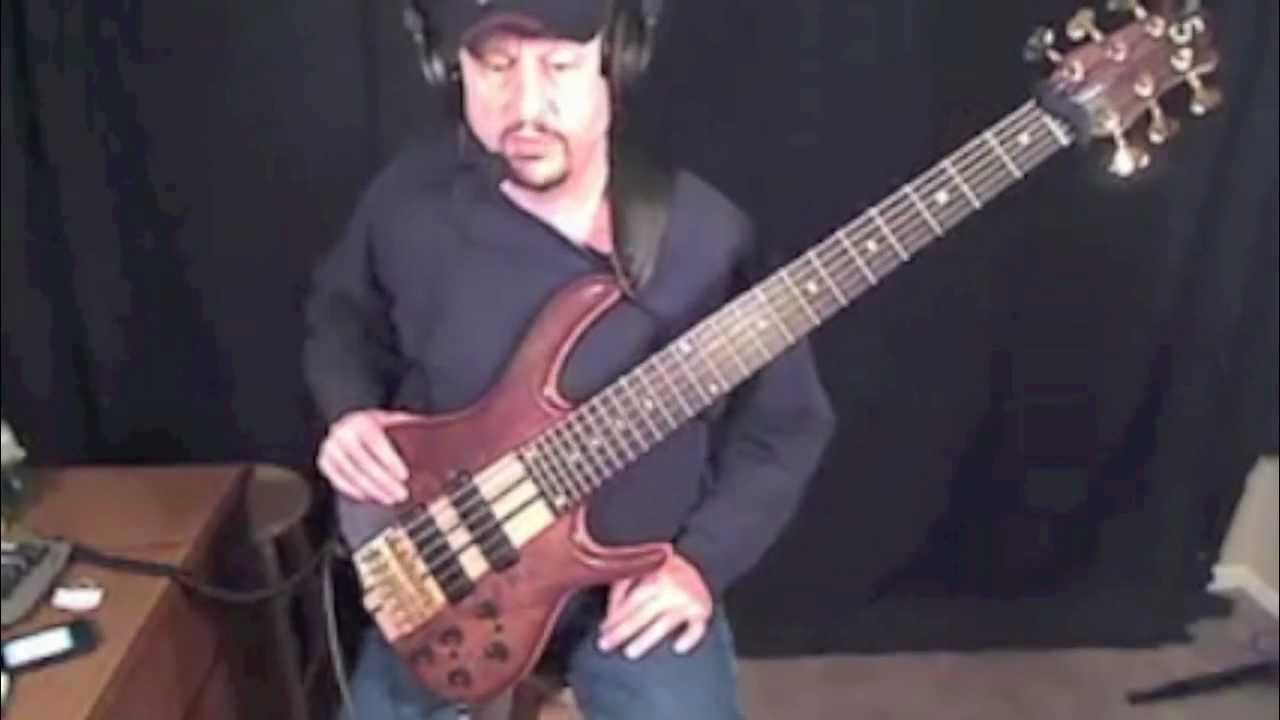
I have been playing and working on walking bass lines for many years and only recently thanks to my current teacher, Kevin Bales, have I realized my approach has always been more scale note based as opposed to chord tone based. Big mistake, right? When you look at the note job of a bass line, which is to outline the chord sound and since my lines were more linear with scale tones, I was not really supporting the harmony as well as I should have. So I guess my message to you is to definitely spend some time working with the chordal approach on your walking bass lines. The following video walks through composing a walking bass line using triads. Walking bass is one of the styles I teach. For personalized coaching on walking bass lines, online bass lessons via Zoom are available.
Read the transcript
Now the idea here for memorizing it is to get it to where you don't have to think about it, or don't have to look at it, and you can look at your bass neck while you do the bass lines. All right, so what we're going to do is a walking bass line just using triads, and we're going to restrict our choices to the first five frets, open string through the first five frets. Okay, so everything up through there. And the reason you want to stay in the first five frets initially is it forces you to use the different sections and positions, to come up with different stuff.
All right, so the best way to proceed, well, you can do it a couple different ways. You can start off with just finding the different possibilities of each triad within that first five frets, and the open string versions will count as a separate position of that particular chord. So for example, if I had A minor 7, I went one flat three five flat three one, right, I could also go, that would constitute A minor left side position section one. Or I could go one flat three five flat three one using the open A string, which would be a section one right side position, because essentially it'd be kind of like doing, but because of the open string it kind of takes away that visual reference.
So we didn't, those weren't necessarily in the triads section, but it's okay to use the open strings in those. Yeah, I mean the open string you want to think of is kind of like a right side position, because normally you would play a right side position starting with the first finger. All right, so we could find the different possibilities. One would be one flat three five flat three, one five flat three five, and this inversion would count as one. We could go one flat three five flat three, one five flat three five using the open E. We can go, let's see, open string, one flat three five flat three, one five flat three five, one flat three five flat three, one five flat three five. You see A here, one flat three five flat three, one five flat three five, one five, one flat three five flat three, one five flat three five.
So you find as many different ones out of the three sections as you can of each chord. Now, I wouldn't say that you should have all that totally down before you proceed to the next step. In fact, if you know your triad sections and positions pretty well by now, you can go ahead and just dive into actually putting together a walking bass line. So don't feel like you have to go through each chord and map out each possibility before moving forward, that's just kind of a step to maybe run through some choices.
All right, so now we want to, each measure is going to get four notes, right? So what you do is you just pick one. Now the only real restriction here would be that you want to try to connect the fourth beat of the chord you're on, pick the closest note sonically to that fourth beat of the next chord. That just makes for a smooth transition. Now there are ways to do interval leaps that we'll get to later.
Okay, so for example, let's say if I just picked one flat three five flat three, my closest D is either going to be the fifth fret on the A string, or open D, since it's the same pitch it really doesn't matter what you go to. But then I can say, okay, I'm going to pick one, and I'm going to go the five, three five for the D. Now, are you clear on which each chord, what type of triad each chord gets? Let's go over that real quick, I'm sorry, we probably should have done this first. Yeah, I mean, I know that learning the A minor, but then I don't know, I know we talked very briefly about the sevens. Yeah, the sevens aren't really important, basically just know that if A minor is going to, A minor 7 is going to get the minor triad. The sevens don't really count yet.
All right, the D7, which is dominant seventh, I don't think we've gotten too into scales yet, but that's going to get a major triad. The G major 7 is going to get a major triad. The C major 7 is going to get a major triad. The F sharp minor 7 flat 5 is going to get a diminished triad. The B7 is going to get a major triad. And then the two measures of E minor are going to get minor triads. So everything gets just major or minor except for the diminished on the F sharp. Exactly. Okay, that's what the flat five means. Right.
Okay, so going back again, we've got our one flat three five flat three. Now I'm just picking one, I mean I could have picked any of those possibilities I wanted to. I'm just starting here, and then I'm going to connect to this D here, I'm going to go one five three five. Now I'm close to this G on the third fret of the E string, I'll go to the three first, one three five three. Then I'm a half step away from the C, third fret on the A string, one five three five. All right, I'm a half step above this F sharp, so I'll go to this one as opposed to this one, that's too far away, on the second fret of the E string, I'm closer to this fourth fret on the D string, so I have one flat five flat three flat five. I'm a half step above this B, so I'll go to the fourth fret of the G string, one five three five. I'm a whole step above this E on the second fret of the D, so I'll pick that one, one five flat three five.
Now I have two measures of E minor, so I need to do two of them, but I want to do different ones, I don't want to repeat the same one twice. All right, now I went one five flat three five, now this five is halfway between the low one and the high one, so it really doesn't matter which one I go to. Does that make sense? All right, so one five flat three five is the first one, so I'll go back to this one again and go one. So do you also, even though you're going to a different place, keep the order the same, like five five three five? No, you can mix that up any way you want, I'm just trying to give it some variety, so I'll switch off, if I do a three first one time I might go to a five, but it's okay to do several threes in a row if you want to, because there is a finite number of choices here, restricting ourselves to the first five frets, there's only so many ways you can do it.
But the root note always goes in the one position, right? Yeah, the root will always be on the first beat of each new chord, for now, that's a temporary rule. That's one thing about music, all rules are temporary. So a good way to approach this, rather than worrying about memorizing a bunch of different ones, is to learn one, I mean really learn one real good, and then vary that one, and then once you learn it good, go ahead and try it with the track. So you see, just using the triads, you're able to come up with a perfectly functional walking bass line. Now, of course, there's a lot more that we want to do with this, but that's enough, I mean, you're clearly outlining the harmony.